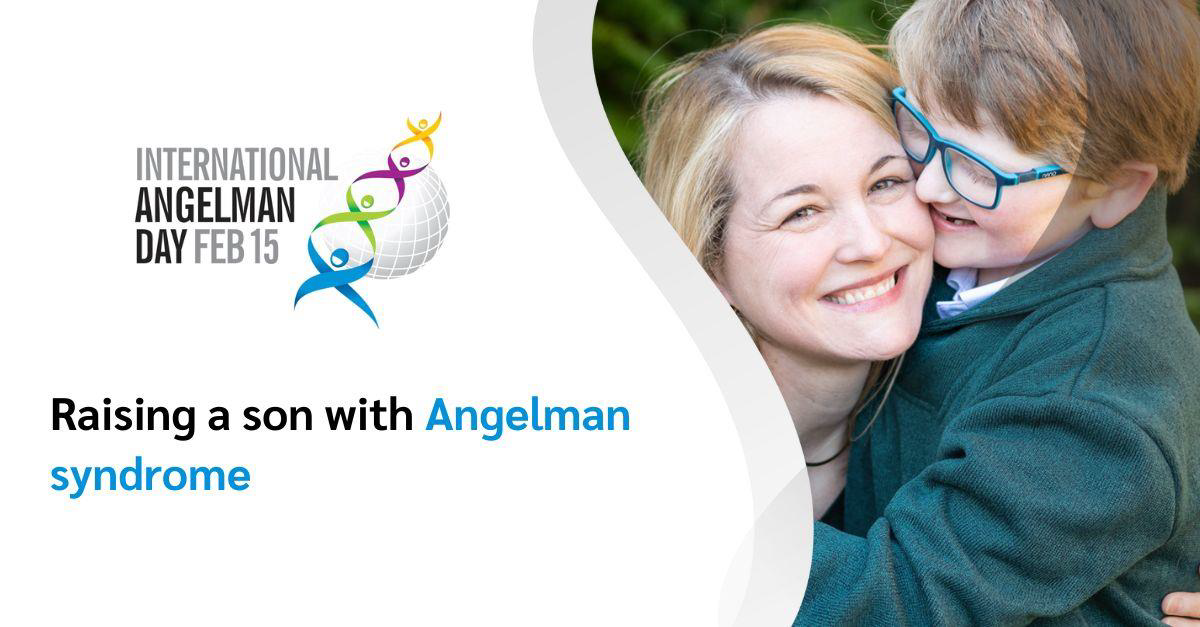




















In honor of International Angelman Day on February 15 and Rare Disease Month (February), the Ultragenyx team recently welcomed Ashley Weinberg for a fireside chat as an opportunity to pause, listen, and ground our work in the lived experiences of the families we serve. Ashley, a mother of three from San Diego, has become a steadfast advocate within the Angelman syndrome community since her son Conner received his diagnosis at age five. Sharing her family’s story, Ashley offers a window into both the challenges and unexpected gifts that come with raising a child with this rare genetic disorder.
The moments that matter most
On a recent Sunday morning, Ashley walked into a busy grocery store holding her son Conner’s hand. To most shoppers passing by, it was an unremarkable sight – a mom and her nine-year-old running errands. For Ashley, it was anything but ordinary.
“Conner was waving at people and smiling. We went in, got what we needed, and walked out. It was just beautiful,” she recalls. “Most people probably didn’t think anything of it. They just saw a family walking in a grocery store.”
But this simple shopping trip isn’t always possible. Conner lives with Angelman syndrome, a rare, genetic neurodevelopmental disorder that can lead to developmental delay, cognitive impairment, limited or absent speech, difficulties with balance and coordination, and debilitating seizures. Many individuals also have disrupted sleep patterns and challenging behaviors, and remain dependent on caregivers for their entire lives. Because of this, in the Weinberg family’s world, these everyday moments most take for granted are hard-won victories.
Finding answers and community
Ashley often describes Conner’s first year of life as quiet and content. But as he grew older, the family noticed that many childhood milestones were beginning to be missed, as Conner was unable to sit up, crawl, or speak. Despite consulting with specialists for years, answers remained elusive. It wasn’t until Conner turned five that a pediatric resident suggested the family pursue genetic testing, when he was officially diagnosed with Angelman syndrome.
“I know many people go through a grieving process when receiving a diagnosis, but for us, there was also a feeling of relief,” Ashley shares. “There was the grief of knowing that this was forever, along with the grief that comes from losing the vision of life you thought you would have, but it was a relief to find a community of people who had lived this life.”
With the diagnosis, Conner’s doctor connected the family to the Angelman Syndrome Foundation (ASF). Through the ASF community, Ashley not only found resources to support Conner’s care but also a sense of purpose. She became a volunteer coordinator for the annual ASF Angelman Strong Walk in San Diego, an event that draws families from across the region. For Ashley, the work has been a way to share experiences, reverse the often crippling isolation that accompanies an Angelman syndrome diagnosis and create the support network she wishes had been immediately available when searching for Conner’s own diagnosis.
“The best part about being part of the Angelman community is that everyone you talk to is always willing to support. It’s a family,” she shares.
Navigating the challenges of Angelman syndrome
As Conner has grown older, some challenges have intensified. “Right now, navigating Conner’s behaviors and triggers has been our biggest challenge,” Ashley explains. “His anxiety has gotten worse. He really struggles with controlling himself emotionally and physically.”
Yet amidst these challenges, there continue to be victories, moments that might seem ordinary to most families but represent monumental progress for the Weinberg’s. This season, Conner started playing baseball with a special needs league, his first time being part of a team.
“Being on the field reminded me of our ASF walks,” she says. “We weren’t the only family with a child having a meltdown because they were just over everything. It was just, ‘Oh yeah, I get it.’ That was really nice.”
While these moments don’t erase the reality of Conner’s needs, the family continues to lean on their community to find new tools to offer him support. Community resources recently helped the family navigate how to obtain the features they needed to remodel their bathroom for Conner’s safety. Conner’s ankle-foot orthotics are helping improve his gait and prevent Achilles surgery. And at their local grocery store, the addition of a Caroline Cart – a specially designed shopping cart for older children and adults with disabilities – doesn’t just support Conner’s mobility: it provides a safe space in an overwhelming world.
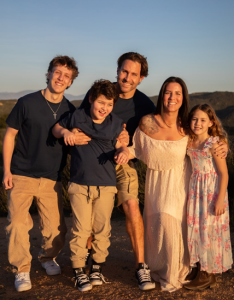
The Weinberg Family
Advice for other families
When asked what she would tell families who are newly diagnosed, Ashley shares, “You will feel alone, but you’re not. The community is there. The resources are there. Just keep asking questions until they fall on the right ears.”
She also encourages other rare families to find meaning in what others might overlook.
“Conner has really taught us how to appreciate life,” she says. “Even going to the grocery store. I’ve been able to find beauty in the smallest things, and I was not that person before.”
To learn more about Angelman syndrome and find community support, visit the Angelman Syndrome Foundation (ASF) and the Foundation for Angelman Syndrome Therapeutics (FAST).