












Across Europe, Middle East, Africa and Latin America, we meet people living with rare diseases and their families whose journeys began long before they received a diagnosis. From Chile to UAE, parents of children impacted by rare genetic diseases often spend years searching for answers. Patients travel across borders to find specialist care. Healthcare professionals struggle to find answers for unknown conditions.
That is why we believe last year’s World Health Assembly Resolution for a Global Action Plan for Rare Diseases is an important moment for the rare disease community. As Ultragenyx, we are proud to work with partners in Europe and Latin American on the development of patient-voice led draft Action Plans for our respective World Health Organization regions.
For the first time, there is an opportunity to create a shared framework for improving the lives of more than 300 million people living with a rare disease worldwide. Together as patients and caregiver communities, clinicians, researchers, policymakers and companies we are coalescing around a common goal.
At Ultragenyx, our mission is to transform the lives of people living with rare and ultra-rare diseases. Over the past decade, we have brought new treatments to people living with rare disease who did not have treatments before. We have also helped advance new approaches to improve rare disease drug development, initiating 12 new evaluation tools based on patient feedback. We do not shy away from adaptive trial designs and seamless Phase 1/2/3 trials to accelerate bringing new treatments to patients. We look at the totality of the disease, encouraging regulators to consider multiple endpoints to address patient variability and breadth of disease in small patient populations.
We believe that scientific innovation is only as meaningful as the lives it changes. Healthcare systems must be able to find patients, connect them with the right expertise and support the full patient journey through access to trained healthcare professionals, appropriate institutions, coordinated services and treatment choice where available. This is the north star of our participation in multi-stakeholder discussions across Europe and Latin America around the future WHO Global Action Plan. These are the ambitions we want to hold ourselves to account for.
Are patients getting accurate diagnoses as soon as possible?
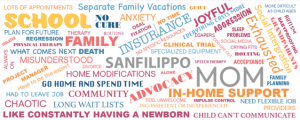
For many people living with a rare disease, the greatest challenge is obtaining an accurate diagnosis. Whether speaking with families affected by Sanfilippo syndrome, Homozygous familial hypercholesterolaemia (HoFH), or other rare genetic conditions, we regularly hear stories of years spent searching for answers. Earlier diagnosis can open the door to specialist care, support services, research opportunities and, where available, treatment. Once a treatment is available, early diagnosis – including at birth – of certain diseases is critical to realise the full benefit a treatment can bring. Reducing the diagnostic odyssey has to be one of the defining ambitions of the Global Action Plan.
Have we strengthened the rare disease ecosystems?
Rare and ultra-rare diseases present unique challenges because expertise, data and patients are often dispersed across countries and continents. In Europe, we’ve seen how investment in the European Reference Network for shared knowledge, cross-border research partnerships and care delivery can generate greater equity. The European Reference Network created the largest formal rare disease expertise network in Europe by connecting 375 hospitals and more than 1600 specialised centres in 28 countries to enable access to highly specialised clinical knowledge regardless of where a patient lives.
The Global Action Plan offers an opportunity to build on this global success story and globalise the impact of shared expertise, patient registries and research networks in helping patients access knowledge and support that may not exist locally.
Is innovation reaching patients?
As a company focused exclusively on rare and ultra-rare diseases, we understand both the promise and the complexity of developing therapies for very small patient populations. We believe the Global Action Plan can play an important role in harmonising the structures, processes and agencies that underpin our research journey, approvals timelines and patient access. We believe the Global Action Plan can create collaboration within and between regions and countries on evaluating the scientific and health economic merits of rare and ultra-rare treatments with no other treatment options. It can showcase best practice in funding treatments and creating pathways that countries can choose to replicate as part of their national rare disease plans. Most importantly, a strong ambition of support for innovation will unlock more research and investment into those rare diseases with no current treatment options.
While healthcare systems differ significantly across the world and even within our regions in Europe, Middle East, Africa, Central and Latin America, the aspirations of rare disease families are strikingly similar. They want answers. They want access to expertise. They want opportunities to participate in research. And they want hope for the future. That is what One Rare Nation means to us. And that is why this moment matters.
Find more about the WHO Global Action Plan for Rare Diseases here.
About the authors
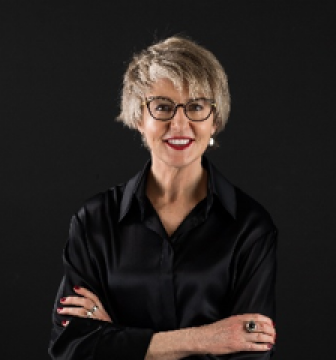
Jane Cooper
Senior vice president and region head, Europe, Middle East and Africa.

Eduardo Thompson
Senior vice president and region head, Latin America